Last reviewed: July 2026. This guide is for harm reduction and education, and is not medical advice.
Drug checking results are useful, but they are easy to overread.
Some tests use a color change. Some use a line on a strip. Some compare a reaction to a purity range or an adulterant chart. None of them prove that a substance is safe, and none of them replace laboratory analysis such as GC/MS or HPLC-MS/MS.
So this guide is not a universal reagent color chart. It is a practical guide to reading the types of drug checking tests actually used in Happy Test Shop products: individual color-change ampoule tests, fentanyl test strips and kits, cocaine purity tests, cocaine adulterant tests, MDMA adulterant tests, and synthetic cannabinoid detection tests.
Start with the type of test
Before reading any result, identify what kind of test you are using. Different products answer different questions.
| Test type | What it can help check | How the result is read |
|---|---|---|
| MDMA identification tests | Whether a sample sold as MDMA may contain amphetamine, methamphetamine, PMA, or PMMA | Color change compared with the included chart |
| Cocaine purity test | Approximate cocaine content range | Color change compared with a purity scale |
| Cocaine adulterant test | Possible cutting agents such as levamisole, phenacetin, lidocaine, benzocaine, procaine, ephedrine, and related adulterants | Color change compared with the included adulterant chart |
| Fentanyl test strips | Fentanyl or some fentanyl analogue contamination in dissolved powder or liquid samples | Strip lines read as positive, negative, or invalid |
| Fentanyl test kit | Fentanyl traces in substances, liquids, surfaces, or objects depending on the kit instructions | Positive, negative, or inconclusive result display |
| K3 synthetic cannabinoid test | Synthetic cannabinoid detection in cannabis or plant material | Result interpreted against the product instructions |
The most important point is that these are not interchangeable. A cocaine purity test does not identify every cutting agent. A cocaine adulterant test does not measure purity. A fentanyl strip does not confirm dose or safety. An MDMA PMA/PMMA test is not the same as an MDMA methamphetamine test.
How to read color-change ampoule tests
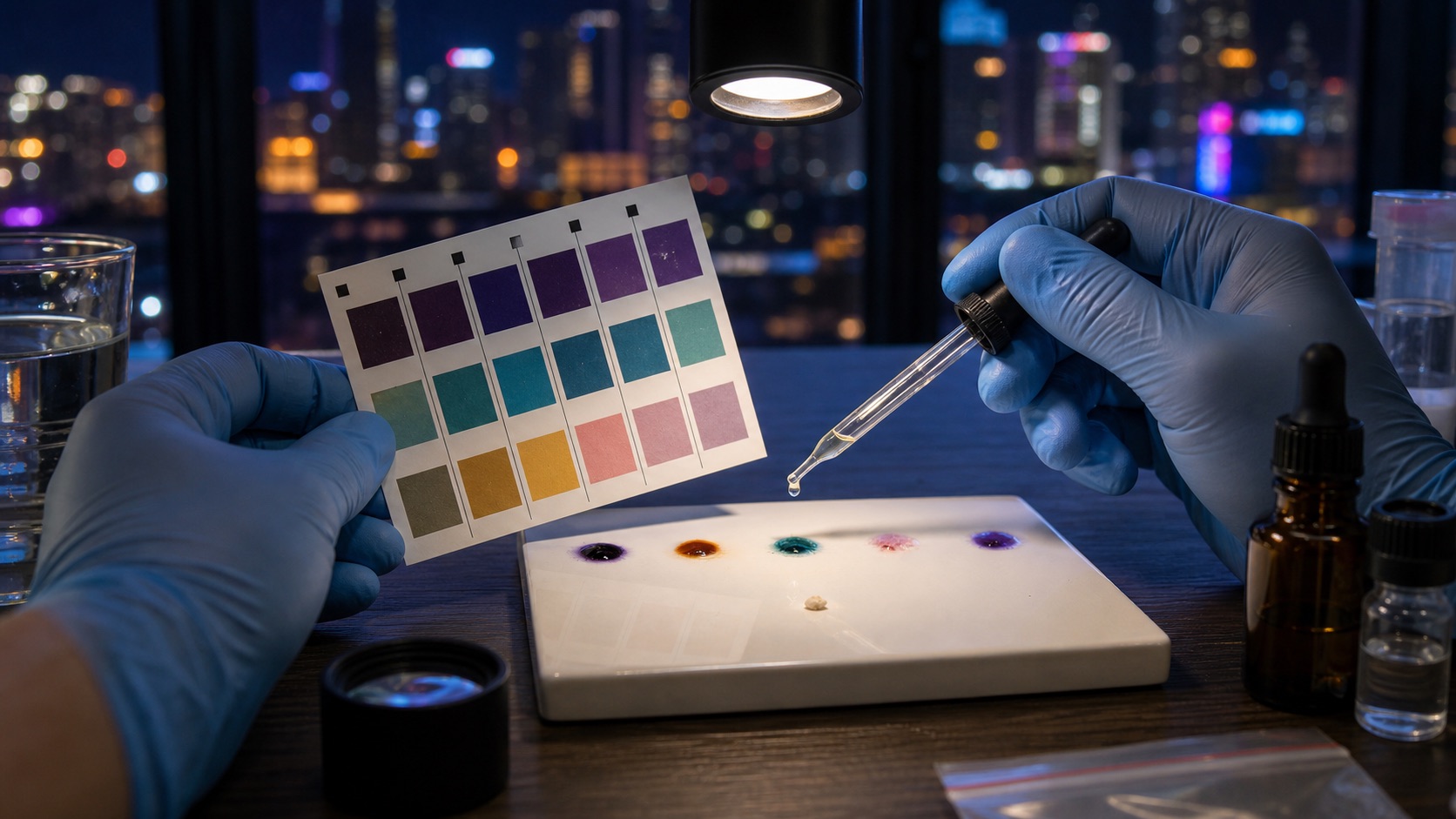
Many individual identification tests use a small ampoule containing a chemical reagent. You add a tiny amount of the sample, observe the reaction, then compare the result to the chart that comes with that specific test.
Read the result in three steps:
- Use the correct chart. Do not compare one product’s reaction to a generic reagent chart from another supplier. The chart included with the product is the one that matters, and the test instruction manual archive is the best place to match the REF code on your kit to the right instructions.
- Watch the timing. Some reactions appear quickly, while others develop over the stated reading window. Follow the product instructions rather than guessing from the first flash of color.
- Treat off-chart colors carefully. If the color does not appear on the included chart, that does not prove the sample is clean. It may mean the test is negative for the specific target, or that another compound, mixture, or cutting agent is interfering.
For example, the MDMA test for methamphetamine is designed to help distinguish MDMA from amphetamine-type stimulants by color comparison. The MDMA test for PMA/PMMA answers a different question: whether PMA or PMMA may be present.
Those are related tests, but they are not the same test.
How to read cocaine test results
Cocaine testing is a good example of why one test rarely tells the full story.
The Cocaine Substance Purity Test is a semi-quantitative color-change test. It is meant to estimate a cocaine purity range by comparing the reaction to the included guide. That can be useful information, but it does not identify every adulterant in the sample.
The Substances Identification Test for Cocaine Adulterants is different. It is designed to flag possible cutting agents such as levamisole, phenacetin, lidocaine, benzocaine, procaine, ephedrine, and related compounds. That helps answer a different question: what else might be in the sample?
Then fentanyl is a separate risk again. A color-change cocaine test should not be treated as a fentanyl screen. For that, use a dedicated fentanyl test strip or fentanyl test kit.
How to read fentanyl test strip results
Fentanyl strips use lines, not a color chart. The exact reading can vary by product, so always follow the instruction page for the specific strip you have.
In general, fentanyl strip results are read as:
| Result type | What it means |
|---|---|
| Positive | The test detected fentanyl or a target fentanyl-related compound above its detection threshold |
| Negative | The test did not detect fentanyl above its detection threshold in that prepared sample |
| Invalid or inconclusive | The test did not run correctly, so the result should not be used |
A negative result is not an all-clear. It can be affected by dilution, sampling, mixture, pH, or procedural errors. A positive result also does not tell you how much fentanyl is present.
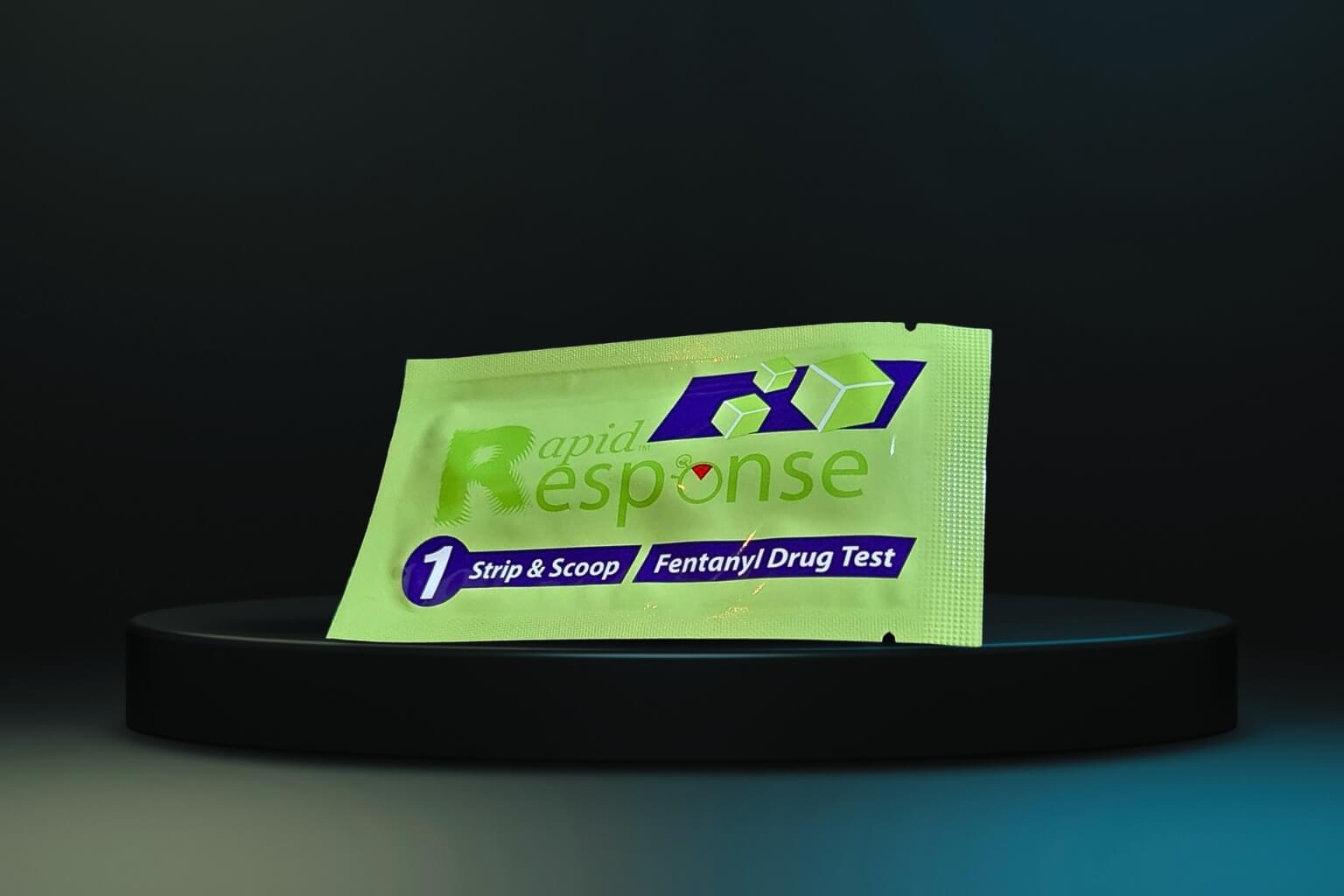
The BTNX Rapid Response Fentanyl Test Strips are designed for powders and liquids, with results in about 1 minute. The Fentanyl Test Kit is a different format that can be used for substances and, depending on the instructions, surface or object tracing. If you are unsure which instruction page applies, check the manual archive and match the REF code to the kit you have.
Why multi-test packs exist
Multi-test packs exist because different risks need different tools.
The 3-Pack MDMA Testing Kit combines checks for methamphetamine substitution, PMA/PMMA adulteration, and fentanyl contamination. The 3-Pack Cocaine Testing Kit combines cocaine purity, cocaine adulterant, and fentanyl detection tests.
That combination gives a broader picture than one test alone, but it still does not prove safety. It only reduces uncertainty across several known risk categories.
What these tests cannot tell you
No rapid drug checking test can answer everything.
These tests do not prove that a substance is safe to use. They do not give medical clearance. They do not confirm dose. Most do not confirm full composition. They can be affected by mixed samples, unexpected compounds, user error, lighting, timing, dilution, or a degraded reagent.
The safest reading is always conservative:
- If a result is unexpected, treat it as a warning.
- If a result is unclear, do not force an interpretation.
- If a test is invalid, retest with a new test.
- If the result conflicts with what you were told the substance was, assume the original claim may be wrong.
- If something feels wrong physically or mentally, seek help early.
A better way to think about results
Drug checking is not about proving something is safe. It is about catching warning signs before a decision becomes harder to reverse.
Use the right test for the question you are asking. Read it against the correct chart or line guide. Pay attention to timing and instructions. Use fentanyl-specific tests for fentanyl risk. And whenever possible, use more than one test type rather than relying on a single result.
That gives you better information. It does not remove the risk.
Sources and further reading
- Happy Test Shop: Shop
- Happy Test Shop: Test Instruction Manuals
- Happy Test Shop: BTNX Rapid Response Fentanyl Test Strips
- Happy Test Shop: Fentanyl Test Kit
- Happy Test Shop: MDMA Test Kit for Methamphetamine
- Happy Test Shop: MDMA Test Kit for PMA/PMMA
- Happy Test Shop: Cocaine Substance Purity Test
- Happy Test Shop: Substances Identification Test for Cocaine Adulterants
- Happy Test Shop: K3 Synthetic Cannabinoids Detection Test
*Disclaimer: Happy Test Shop does not condone, encourage, or promote the purchase, possession, or use of illegal substances. Our products and educational content are provided solely for harm reduction purposes, helping individuals better understand potential risks and make informed decisions about their safety. Drug testing kits are tools intended to reduce harm and prevent accidental exposure to dangerous adulterants, but they do not guarantee safety and should not be interpreted as approval or endorsement of substance use.